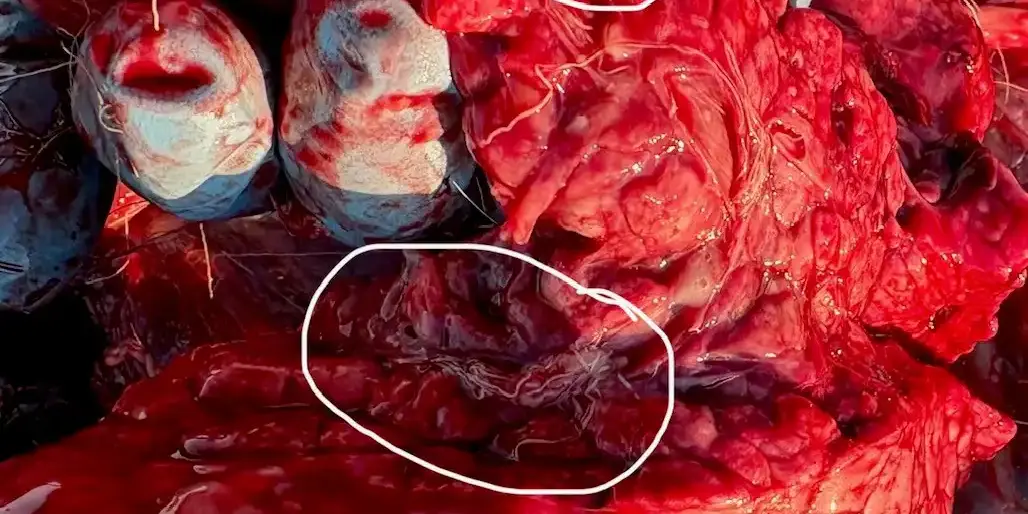
Although not the typical season for it, we are still seeing some lungworm around. Notably in yearling deer and cattle.
Lungworm is picked up while animals are grazing contaminated pasture. Larvae are ingested and make their way from the gut to the lungs, where they grow into adult worms. Those adults’ lay eggs, which are coughed up, swallowed, and passed out in the faeces, ready to start the cycle all over again.
Warm and wet conditions are when they thrive.
Larval contamination can be high in young stock systems.
Keep and eye/ear out for:
Clinical signs occur because of the damage and migration of adult worms moving through the airways but also the immune response triggered by their presence means a lot more mucus/fluid production in the airways.
- A harsh, persistent cough
- Fast or difficult breathing
- Excessive drooling
- Animals dropping condition or not doing as well as they should
- Sudden death in yearling stock
Prevention and monitoring:
One of the easiest ways to keep on top of lungworm is to listen for coughing when around stock and have a robust parasite management plan.
Diagnosis can be made by a faecal egg count or by visualisation of adult worms in the lungs during a post mortem (as pictured).
Ask to add on a lungworm float when bringing in faecal egg count samples, as a different technique is needed to ID lungworm eggs.
Treatment:
Drenching and pasture management are key when lungworm is diagnosed. Treatment of any secondary respiratory infections should also be considered.
A word of caution—if animals have a heavy lungworm burden, drenching can also come with unique challenges. As adult worms die in large numbers, they can block the airways and be life threatening.
Lung worm infections will cause reduced growth rates and heavy burdens can leave scar tissue behind on the lungs. Check young stock regularly and have a parasite management plan in place to prevent outbreaks.
If you’ve noticed coughing stock or have concerns about lungworm on your farm, give your local Vet Services Team a call. We’re happy to help with diagnosis, treatment, and prevention strategies.
- Hastings: 06 876 7001
- Waipukurau: 06 858 9060
- Dannevirke: 06 374 7021