Growing healthy lambs takes more than simply providing feed and hoping for the best. Vaccination programmes, parasite management and good grazing practices all play a critical role in helping lambs reach their potential.
At Vet Services Hawke’s Bay, one of the most common challenges we see in growing lambs is preventable production losses caused by infectious diseases and internal parasites. Understanding how these threats affect your flock can help you make better decisions throughout the season.
Why Vaccinations Matter
Many farmers are familiar with names like 5-in-1, 7-in-1, 8-in-1 and 10-in-1 vaccines, but not everyone understands exactly what they are protecting against. Clostridial diseases remain one of the most important diseases to vaccinate for, as the bacteria survive for long periods in soil and thrive in low-oxygen environments. These diseases can cause sudden deaths in otherwise healthy animals.
The major clostridial diseases include:
- Pulpy kidney
- Tetanus
- Blackleg
Depending on your property’s history and risk factors, additional vaccinations may be worth discussing with your veterinarian, including protection against Salmonella, Toxoplasma, Campylobacter and Scabby Mouth.
Vet Services stock Lifestyle Packs of vaccinations and drenches for smaller stock numbers.
Lambs Are Born Without Protection
Newborn lambs have little natural immunity of their own. They rely on antibodies passed from the ewe through colostrum during their first few hours of life. However, this protection does not last forever.
To develop long-term immunity, lambs need their own vaccination programme.
The recommended schedule generally involves:
- First vaccination (sensitiser) at approximately six weeks of age.
- Booster vaccination four weeks later.
- Annual boosters thereafter.
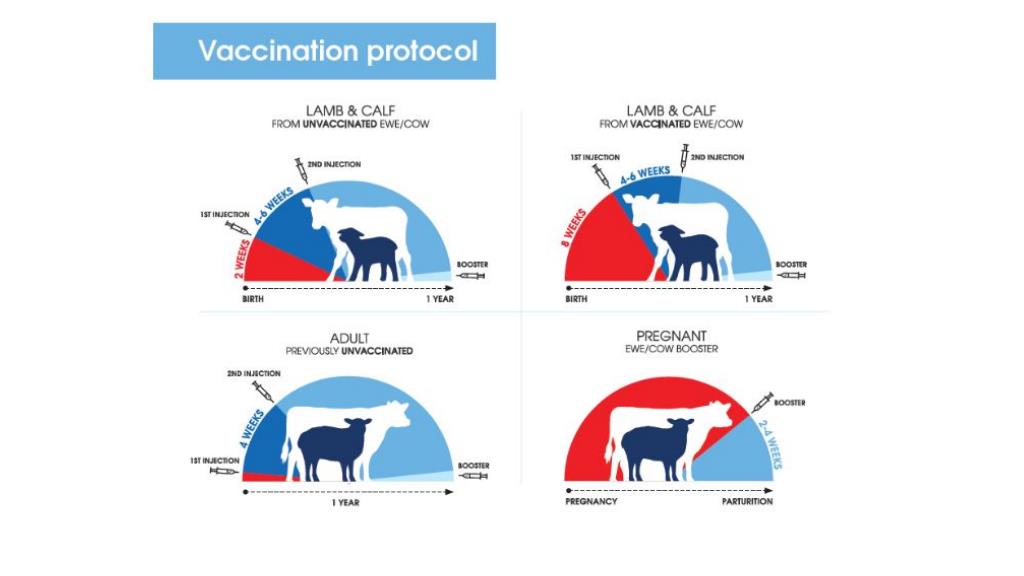
If ewe vaccination status is unknown or lambs are born to unvaccinated ewes, alternative vaccination schedules may be required. Discussing a tailored programme with your veterinarian can help ensure adequate protection.
Understanding Worm Burdens
Internal parasites are one of the biggest challenges facing young sheep in New Zealand pasture-based farming systems.
Worms compete directly with lambs for nutrients and energy. Heavy burdens can quickly affect growth rates, production and overall health. Because sheep continuously graze areas contaminated with faeces, parasite exposure is an ongoing challenge.
Signs of Worm Burdens
Some signs are obvious, while others are less noticeable but still impact productivity.
Common signs include:
- Scours
- Dags
- Reduced growth rates
- Weight loss
- Lethargy
- Death in severe cases
Importantly, many lambs suffer from subclinical worm burdens. These animals may look healthy but fail to reach expected growth targets, reducing overall farm performance.
How the Worm Lifecycle Works
Understanding the worm lifecycle is crucial when designing an effective parasite control programme.
After infective larvae are eaten:
- The larvae mature inside the animal.
- Adult worms produce eggs.
- Eggs are passed in dung.
- Under suitable environmental conditions, larvae hatch and develop into infective stages on pasture.
- Grazing animals then consume these larvae, continuing the cycle.
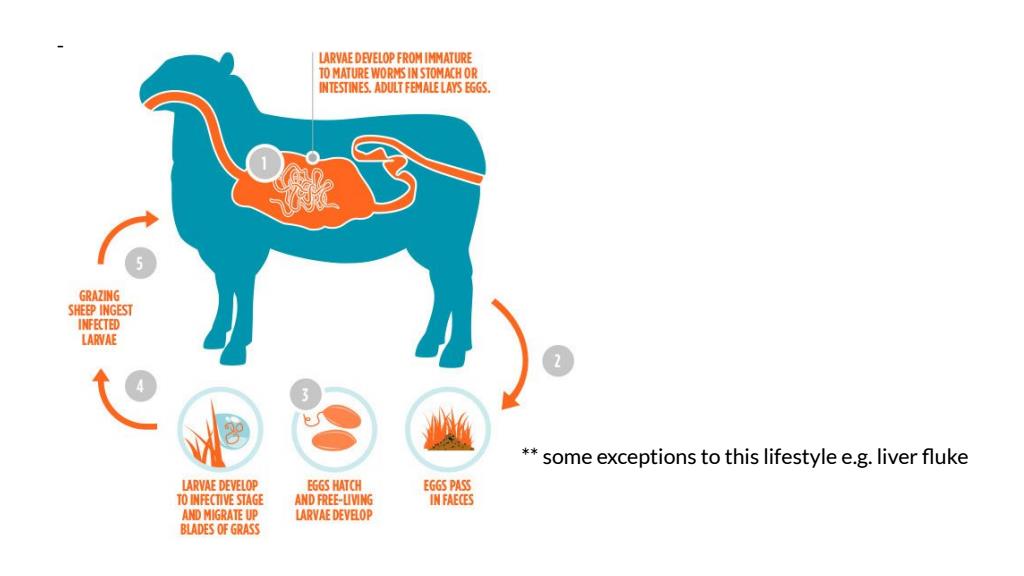
The key takeaway? Most of your worm problem is actually on the pasture, not inside the sheep. Approximately 90% of worms exist as infective larvae on pasture, while only a small proportion are inside animals.
Why Drenching Alone Isn’t Enough
It can be tempting to think drenching alone will solve parasite problems, but that’s rarely the case.
Larvae tend to live in the bottom third of the pasture where moisture levels are highest. When pasture residuals become too low, lambs are forced to graze the areas with the highest parasite challenge.
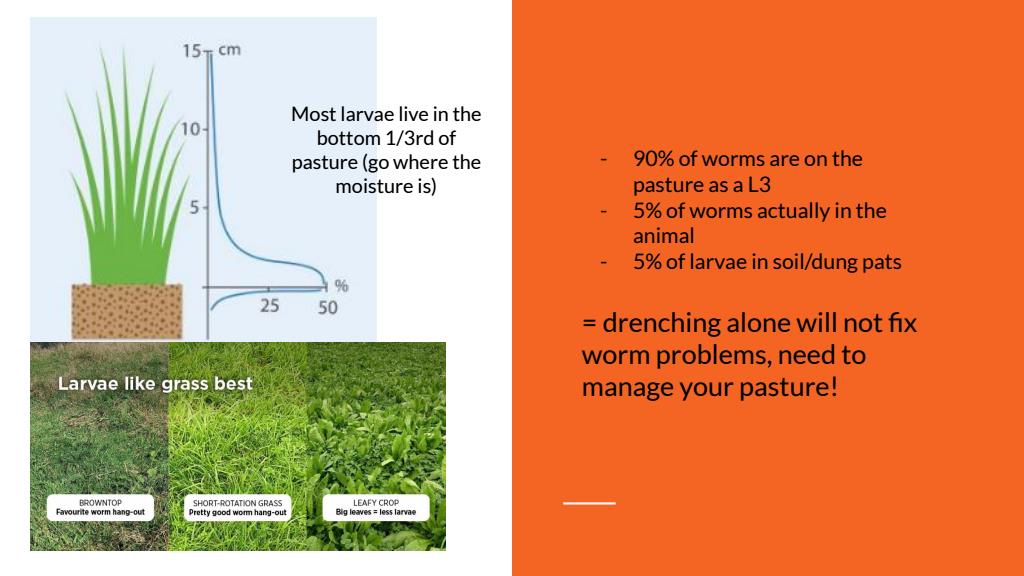
As worm resistance becomes increasingly common, relying solely on drenches is becoming less effective. Successful parasite control requires a combination of drenching, nutrition and grazing management.
Factors That Influence Worm Burdens
Parasite challenges vary between farms and even between mobs on the same property.
Animal Factors
These include:
- Nutrition and body condition
- Age
- Pregnancy status
- Individual resistance or resilience to worms
Young animals are particularly vulnerable because their immune systems are still developing and they have less ability to control worm burdens.
Seasonal Factors
Parasite pressure changes throughout the year.
- In spring, ewe immunity naturally decreases around lambing, leading to increased egg shedding.
- In Summer, larvae numbers decrease due to the hot, dry weather.
- Autumn often presents the highest challenge because warm, moist conditions are ideal for larval development. In contrast, hot dry summers and cold winters generally slow parasite survival and development.
- Winter’s cold conditions slow down the development of larval.
Grazing Management: Your Most Powerful Tool
Effective grazing management is one of the best ways to reduce parasite contamination and improve lamb performance.
Strategies include:
- Using cattle or adult stock to clean up pasture after lambs.
- Maintaining adequate pasture residuals.
- Using alternative forage crops such as brassicas or clover.
- Making hay or silage from heavily contaminated paddocks.
- Rotational grazing to reduce reinfection.
- Quarantining and managing introduced stock carefully.
Good pasture management not only reduces parasite exposure but can also help slow the development of drench resistance.
Using Faecal Egg Counts to Guide Decisions
Faecal egg counts (FECs) are a valuable tool for assessing parasite burdens and helping guide management decisions.
By examining faecal samples under a microscope, veterinarians can estimate the number of worm eggs being shed by animals. While FECs are not perfect and should always be interpreted alongside animal performance and clinical signs, they provide useful information when deciding whether intervention is needed.
Regular monitoring allows producers to make more informed decisions and avoid unnecessary drench treatments.
Final Thoughts
Vaccinations and parasite management remain two of the most important investments you can make in your lamb crop. Healthy lambs grow faster, perform better and deliver stronger returns.
A successful programme combines:
- Effective vaccination schedules
- Good colostrum management
- Strategic drenching
- Regular monitoring
- Strong grazing management
If you have any concerns about your lambs, or would like to learn more please get in touch with your local Vet Services team.
- Hastings 06 876 7001
- Napier 06 843 5308
- Waipukurau 06 858 9060
- Dannevirke 06 374 7021