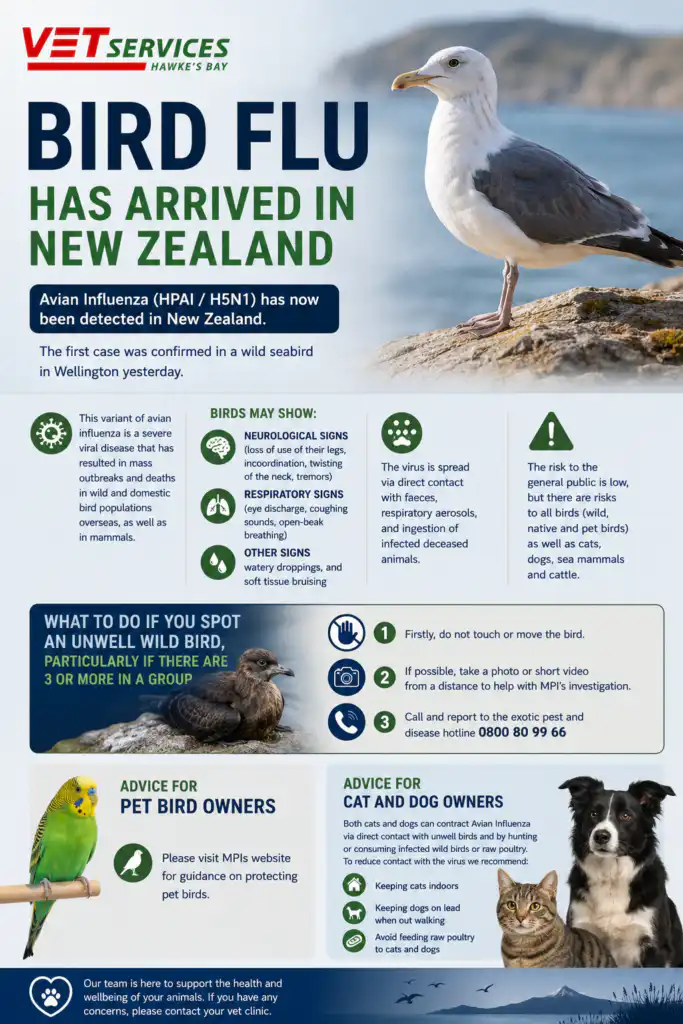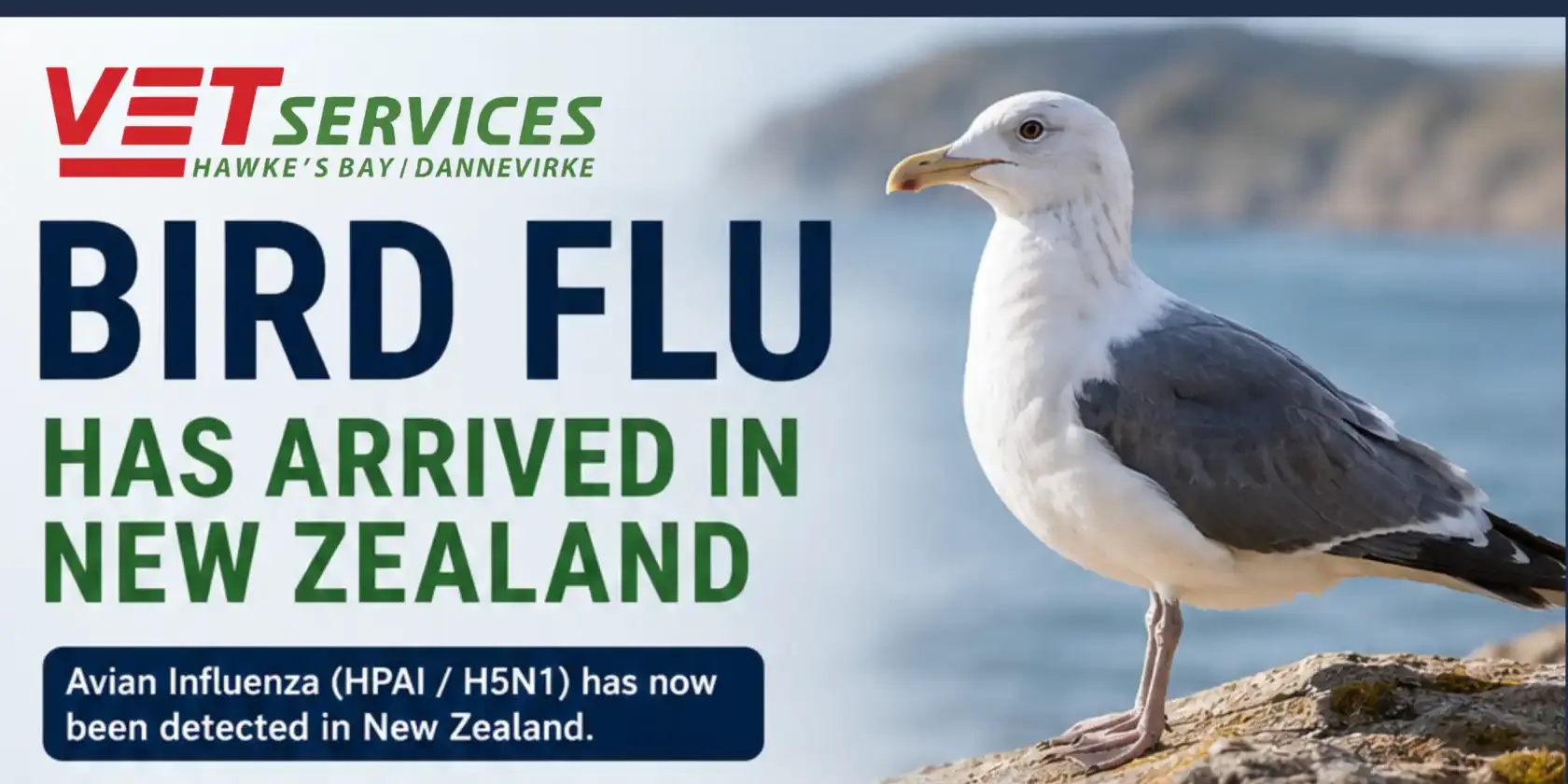
Avian Influenza (HPAI H5N1) Confirmed in New Zealand
Avian influenza HPAI H5N1, commonly known as bird flu, has now been detected in New Zealand, following a positive test in a wild seabird found near Wellington.
While this is an important development for animal health in New Zealand, authorities advise that the risk to the general public remains low, and there is currently no evidence of H5N1 spreading to poultry in New Zealand.
H5N1 is a highly pathogenic strain of avian influenza that has caused significant illness and deaths in wild and domestic bird populations overseas. The virus can also infect some mammals, including cats, dogs, marine mammals and cattle.
What signs should you look out for in birds?
Birds affected by avian influenza may show a range of symptoms, including:
- Neurological signs such as twisting of the neck, tremors, difficulty walking or loss of coordination
- Respiratory signs such as eye discharge, coughing or difficulty breathing
- Watery droppings
- Bruising or swelling of soft tissues
- Sudden or unexplained death
What should you do if you find a sick or dead wild bird?
If you come across an unwell or dead wild bird, do not touch, handle or move it.
If it is safe to do so, take a photo or short video from a distance. This may help authorities assess and investigate the situation.
MPI advises reporting groups of three or more sick or dead wild birds to the Exotic Pest and Disease Hotline on 0800 80 99 66.
Keep children and pets away from sick or dead birds and avoid contact with bird droppings or potentially contaminated areas.
Advice for pet bird owners
If you own chickens, ducks, aviary birds or other pet birds, there are steps you can take to reduce their risk of exposure.
Where practical, limit contact between your birds and wild birds, particularly wild waterfowl and seabirds. Keep food and water sources protected from contamination by wild birds and maintain good hygiene around enclosures, footwear and equipment.
Follow the latest guidance from MPI on protecting domestic and pet birds from avian influenza.
What about cats and dogs?
H5N1 primarily affects birds, but infections have also been reported in mammals overseas, including cats and dogs.
You can help reduce your pet’s risk by:
- Keeping cats indoors where possible to reduce hunting and contact with wild birds.
- Keeping dogs on a lead in areas where sick or dead wild birds may be present.
- Preventing pets from hunting or scavenging birds and other wildlife.
- Keeping pets away from sick or dead birds, feathers and bird carcasses.
- Avoiding feeding raw poultry products to cats and dogs.
If your pet has had contact with a sick or dead bird, avoid handling the bird yourself and contact your veterinary team for advice.
Concerned about your pet or birds?
If you have concerns about the health of your pet bird, cat or dog, or are unsure what precautions you should be taking, please contact your local Vet Services clinic for advice.
If you find sick or dead wild birds, please contact MPI directly rather than bringing the bird into a veterinary clinic.
Important: Please do not bring any bird into a Vet Services clinic without contacting us first. Phone your clinic before arrival so our team can provide appropriate advice and arrange safe triage if veterinary care is required. This reflects the biosecurity precautions recommended in the veterinary alert guidance.